HalalHub.vn · In-depth · 19 November 2026
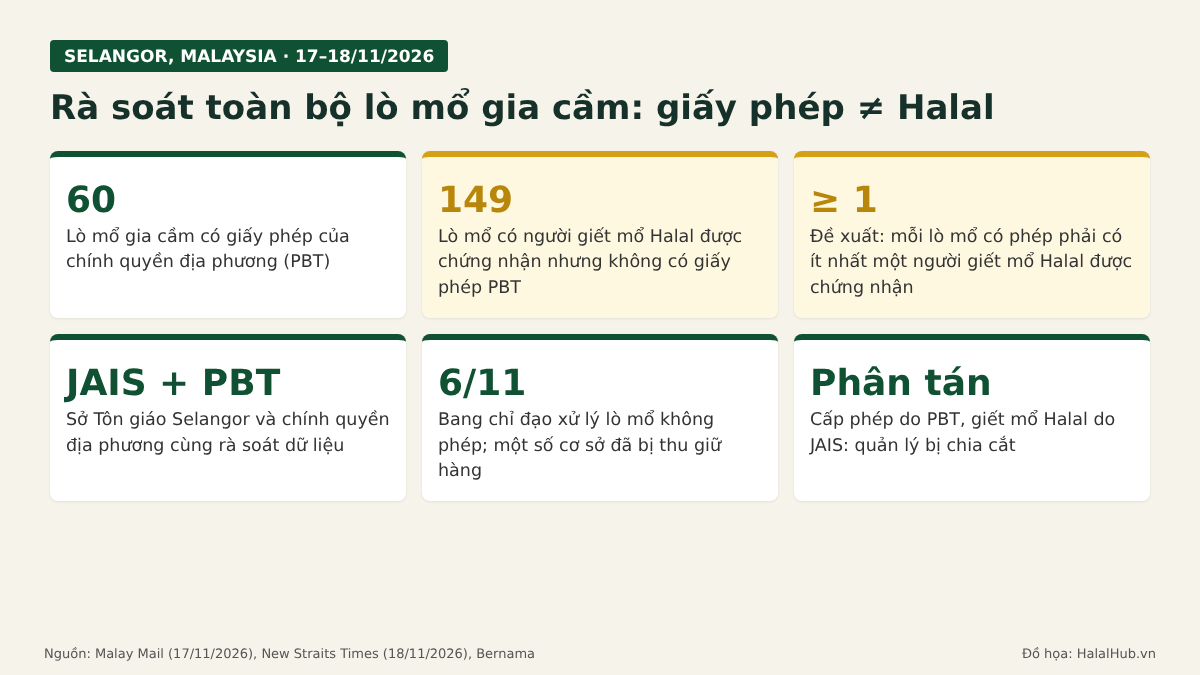
(HalalHub.vn) – Three weeks after 6.5 tonnes of chicken were seized in Puchong, Selangor, Malaysia, released striking review figures: only 60 poultry slaughterhouses hold business licences, while another 149 facilities employ certified Halal slaughterers but operate without licences. Behind these numbers lies fragmented oversight across three authorities and a question every Halal meat supply chain, including Vietnam’s, must answer: how can Halal compliance be demonstrated at the slaughterhouse itself?
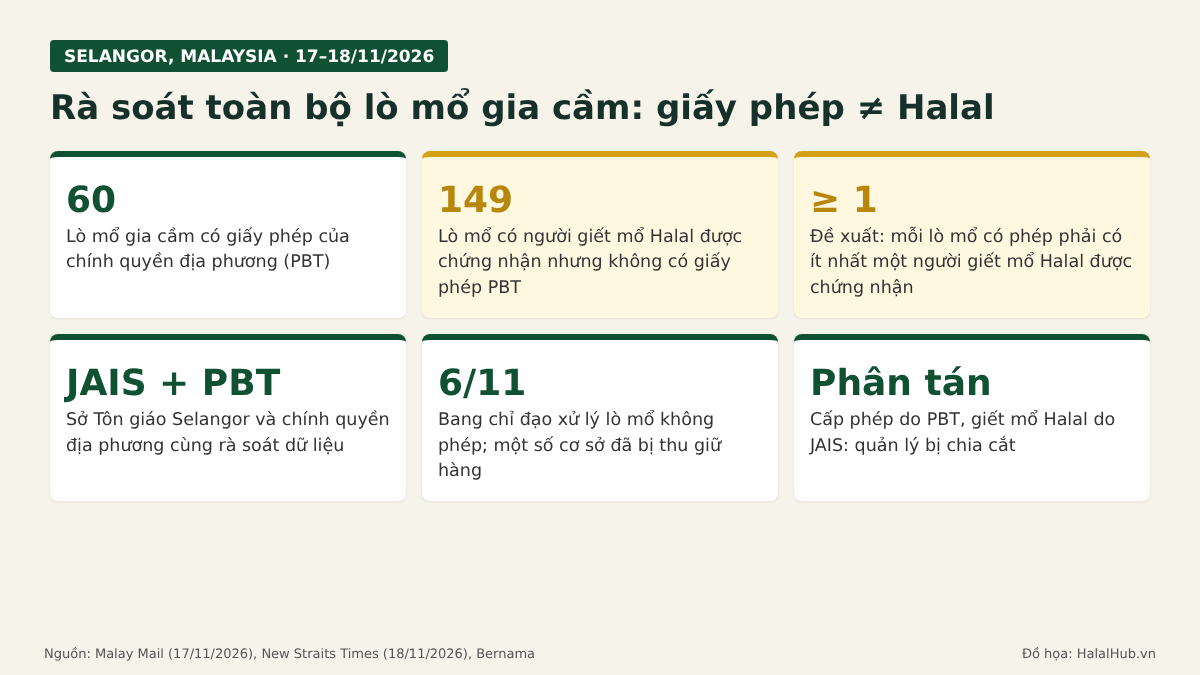
Poultry slaughterhouse review figures in Selangor. Graphic: HalalHub.vn, compiled from Malay Mail, New Straits Times and Bernama.
1. The starting point: what happened in Puchong?
On 29 October 2026, authorities raided a poultry slaughterhouse in Puchong. According to Bernama and Malay Mail, the facility processed more than 40,000 chickens daily, supplying businesses across the Klang Valley. Preliminary investigations found that it used electrical water-bath stunning at voltages police recorded as 60–130 V, whereas Selangor permits less than 10 V. As a result, many chickens died before their throats were cut.
Halal requirements stipulate that an animal must be alive at slaughter. A chicken killed by electricity is no longer considered Halal even if its throat is subsequently cut. JAKIM also confirmed that the facility did not hold Malaysian Halal certification. Approximately 6.5 tonnes of chicken were seized, 12 foreign workers detained, the facility closed for two weeks and restaurants instructed to stop purchasing from it.
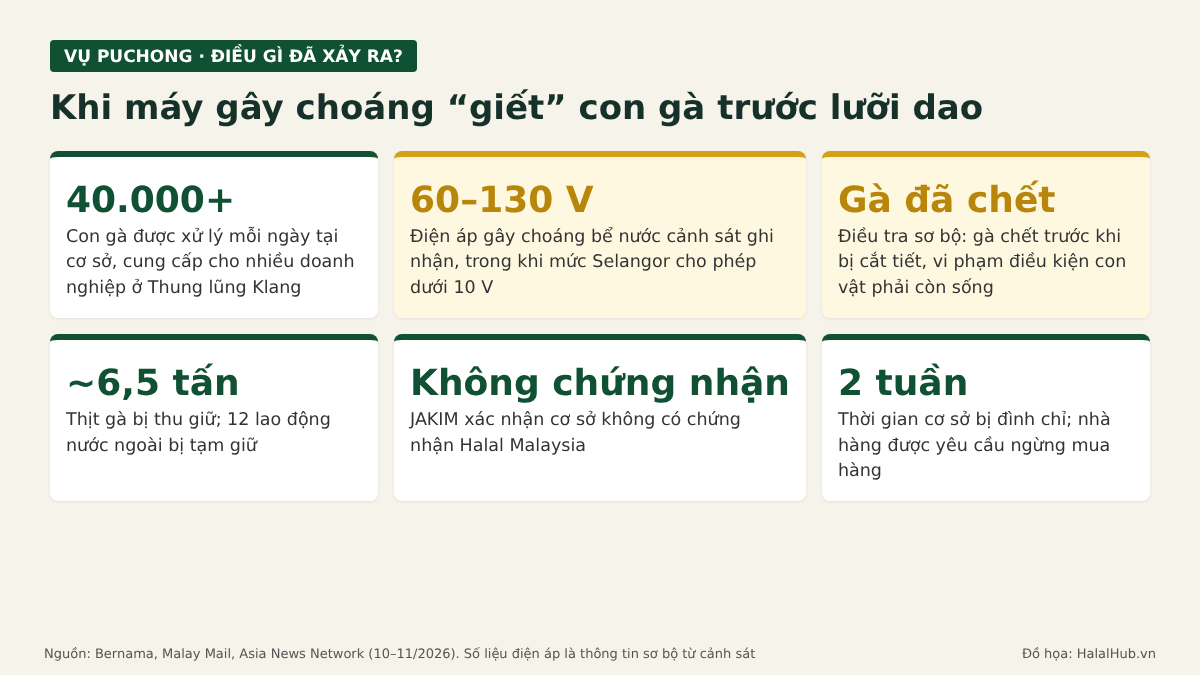
The Puchong case in numbers. Graphic: HalalHub.vn, compiled from Bernama, Malay Mail and Asia News Network.
| 🔎 STUNNING ITSELF IS NOT THE ISSUE Electrical water-bath stunning is widely used in Malaysian Halal poultry plants, with controlled parameters that render animals temporarily unconscious while keeping them alive. According to Asia News Network’s analysis, the core issue at Puchong was electrical levels many times above the limit, turning stunning into the step that killed the animals, rather than the use of stunning itself. |
2. Halal poultry slaughter: five control points
Malaysia’s MS 1500 standard and JAKIM’s poultry certification procedures set specific slaughter requirements. Understanding them explains why Malaysia is focusing on slaughterers and stunning parameters.
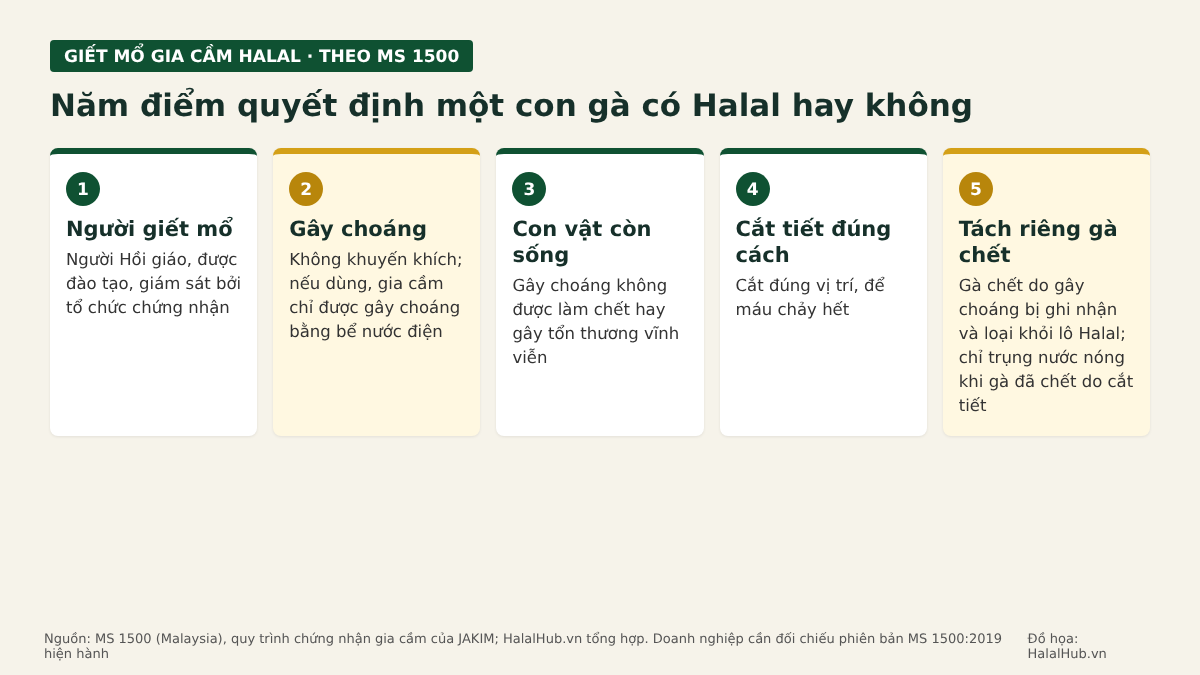
Five control points in Halal poultry slaughter. Graphic: HalalHub.vn, compiled from MS 1500 and JAKIM procedures.
| Control point | Key requirement |
| Slaughterer | A Muslim who understands Halal slaughter requirements and is trained and supervised by the certification body. |
| Stunning | Not encouraged. If used for poultry, only electrical water-bath stunning is permitted, subject to controlled conditions. |
| Animal alive | Stunning must not cause death or permanent injury; the animal must be alive when its throat is cut. |
| Throat cutting | Cut at the correct location and allow complete bleeding. |
| Segregation | Chickens killed by stunning must be recorded and excluded from the Halal batch; scalding is permitted only once death from throat cutting is confirmed. |
Sources: MS 1500 (2009 edition and summaries of the 2019 edition), JAKIM poultry certification procedures. Businesses should consult the current MS 1500:2019 standard and their certification body’s guidance.
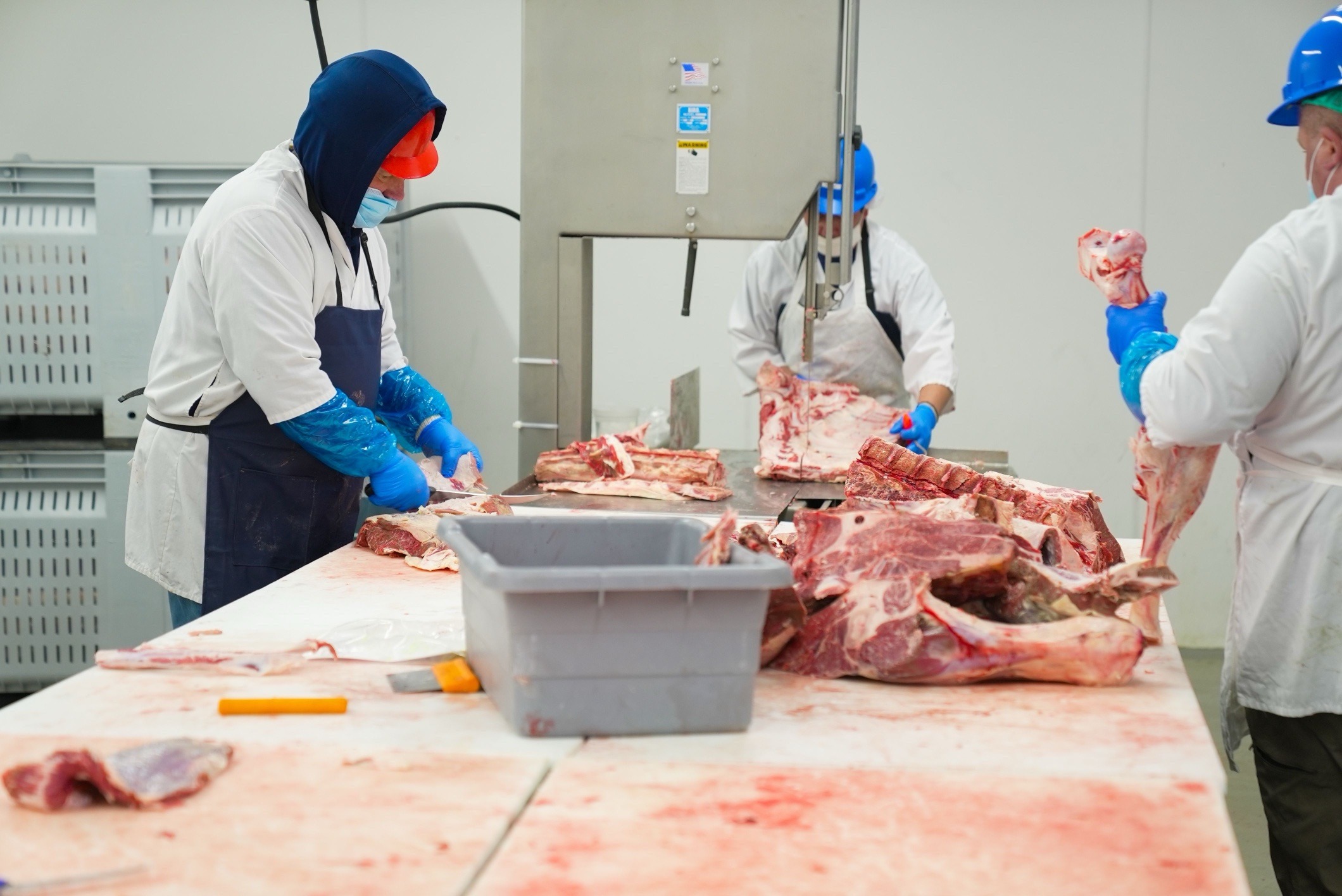
Slaughter and cutting determine meat’s Halal status before packaging and labelling. Illustrative photo: Pexels.
3. Selangor: half a million chickens daily, three oversight authorities
According to Bernama, Selangor consumes approximately 500,000 chickens daily on average, but only 57% of its live-chicken supply is produced within the state. This scale explains how a single non-compliant facility can affect a whole network of restaurants and shops.
According to Malay Mail, Selangor Islamic religious affairs committee chairman Mohammad Fahmi Ngah said the state had 60 slaughterhouses licensed by local authorities (PBT), while 149 facilities employed certified Halal slaughterers but lacked PBT licences. He highlighted the cause: licensing falls under PBT, while Halal slaughter falls under the Selangor Islamic Religious Department (JAIS), fragmenting oversight.
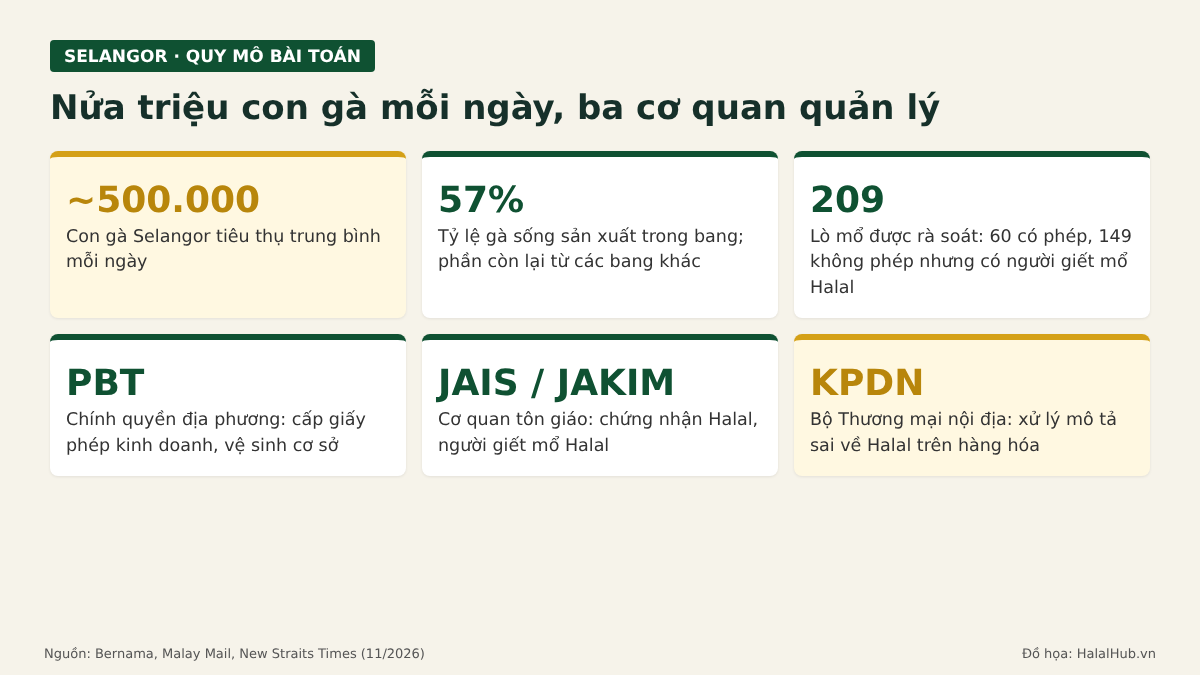
The scale of Selangor’s Halal poultry challenge. Graphic: HalalHub.vn.
“An operating licence does not mean Halal certification.” – JAKIM representative (as reported by Malay Mail).
The lists of licensed facilities and facilities with Halal slaughterers barely overlap. A slaughterhouse can operate legally as a business without ensuring Halal compliance; conversely, one employing Halal slaughterers may still operate without a licence and lack hygiene and food-safety controls. According to New Straits Times, JAIS and local authorities are reviewing all poultry slaughterhouse records to identify facilities operating without licences or certified Halal slaughterers.
4. One month, five steps to tighten controls
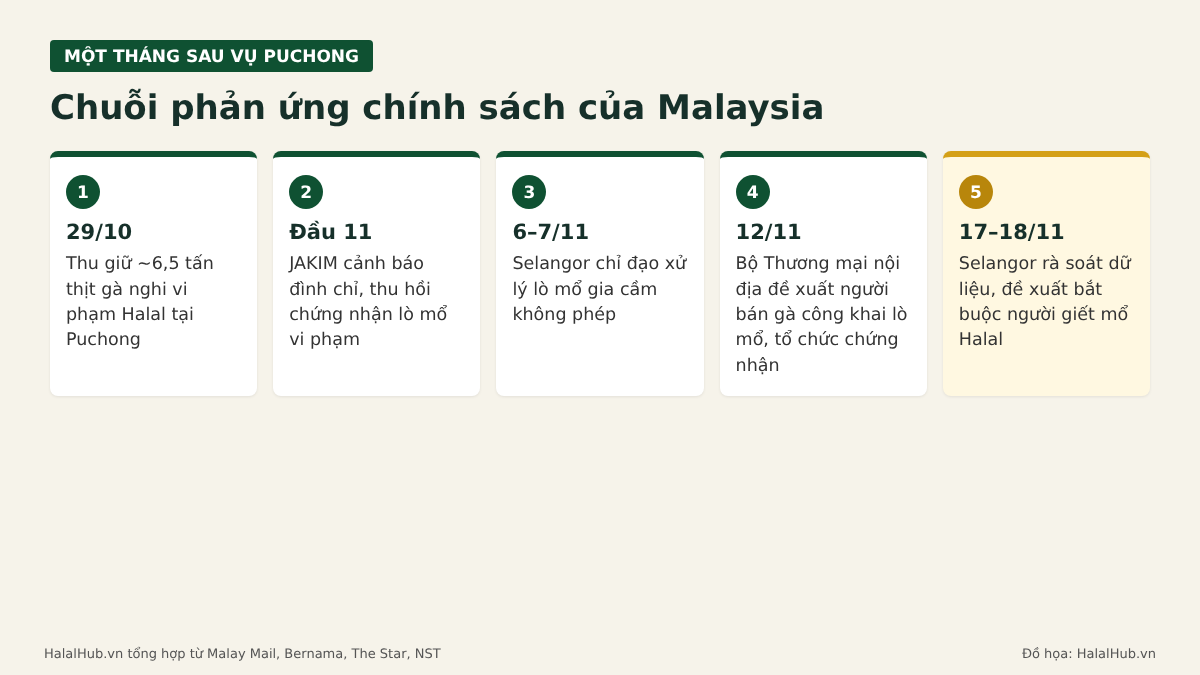
Malaysia’s policy response following Puchong. Graphic: HalalHub.vn.
In just three weeks, Malaysia moved from handling one incident to redesigning oversight: JAKIM warned of suspension or revocation of certificates for offending slaughterhouses (there are 218 certified slaughterhouses nationwide, each inspected at least twice annually); Selangor ordered action against unlicensed slaughterhouses; the domestic trade ministry proposed requiring retailers to disclose their slaughterhouses and certification bodies; and Selangor is now proposing that every licensed slaughterhouse employ at least one certified Halal slaughterer.
| 📌 KEY POINTS Halal status is determined at the slaughterhouse before packaging and labelling. Business licensing and Halal certification are separate systems; Malaysia is seeking to connect them. Stunning parameters are the most important technical control point for poultry. No implementation date has been set for the new proposals. |
5. Lessons for Vietnam’s poultry supply chain
Vietnam is not yet a major poultry meat exporter to Muslim markets, but several livestock groups have expressed interest in exporting chicken, processed chicken products and eggs to Muslim countries, according to Bao Dau Tu. Muslim tourists also create domestic demand for Halal meat. Puchong shows that buyers will ask detailed questions about slaughter.
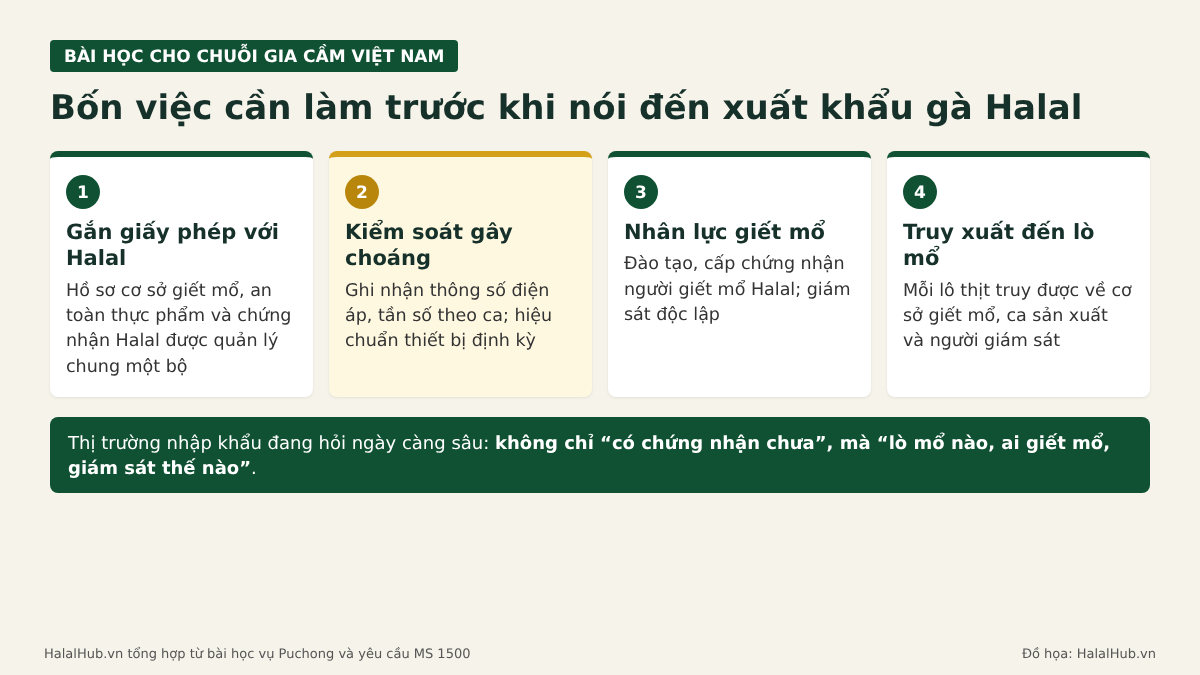
Four lessons for Vietnam’s poultry supply chain. Graphic: HalalHub.vn.
1. Maintain a unified record for each slaughterhouse: business licence, food safety documentation, Halal certification and slaughterer roster.
2. Control and record stunning parameters by shift and calibrate equipment regularly; segregate and record chickens that die before throat cutting.
3. Invest in Halal slaughter personnel through training, certification and independent supervision.
4. Ensure traceability back to the slaughterhouse: every meat batch should be traceable to the facility, production shift and supervisor, with information ready for buyers, as Malaysia is proposing for retailers.
| 🇻🇳 IMPLICATIONS FOR BUSINESSES Buyers’ questions are changing. Previously, they asked whether a product was Halal-certified; after Puchong, they ask which slaughterhouse, who performed slaughter, what stunning parameters were used and who supervised. Vietnamese businesses seeking to enter Halal meat supply chains should start preparing data-backed answers now. |
6. Conclusion
Puchong was more than a single violation: it tested an entire system. Malaysia’s response points to a clear direction: connect licensing closely with Halal compliance, standardize slaughter personnel and make origins transparent through to retail counters. Vietnamese businesses entering regional Halal meat supply chains will also need to meet these standards.
Glossary
MS 1500: Malaysia’s standard for the production, preparation, handling and storage of Halal food.
Electrical water-bath stunning: immersing poultry heads in electrified water to render birds temporarily unconscious before throat cutting.
JAIS: Selangor Islamic Religious Department.
PBT: Malaysia’s district and municipal local authorities, responsible for business licensing.
KPDN: Malaysia’s Ministry of Domestic Trade and Cost of Living.
JAKIM: Department of Islamic Development Malaysia.
References
Official documents and sources
Media and specialist analysis (secondary sources, cross-checked by HalalHub.vn where possible)
New Straits Times – Selangor reviews data on poultry slaughterhouses amid halal compliance concerns
Bernama – Puchong Plant Processes 40,000 Chickens Daily, Exceeds Stunning Voltage Limit – Police
Bernama – Selangor consumption and supply of chicken
Malay Mail – Puchong chicken supplier shut for two weeks after halal breach discovery
Business Today – JAKIM Could Rescind HALAL Certification If Slaughterhouses Violate Standards
Bao Dau Tu – Vietnamese meat processors seek to enter the Halal market
Illustrative photos: Pexels (free licence). Graphics: HalalHub.vn.
HalalHub.vn · Published 19 November 2026 · Legal information checked through 19 November 2026; regulations may change. Businesses should consult original documents before applying them.
| ℹ️ ABOUT HALALHUB.VN’S INDEPENDENCE HalalHub.vn is not a Halal certification body and does not issue certificates. Articles provide reference information; HalalHub.vn does not accept payment to name businesses or certification bodies in its articles. |
HalalHub.vn service information
| 🤝 CONNECT WITH HALALHUB.VN Already certified: register and create a business profile in the HalalHub.vn directory, stating the issuing body, certification scope and validity. Not yet certified: follow News and Knowledge for market-specific regulations and timelines. Register at: https://halalhub.vn |